
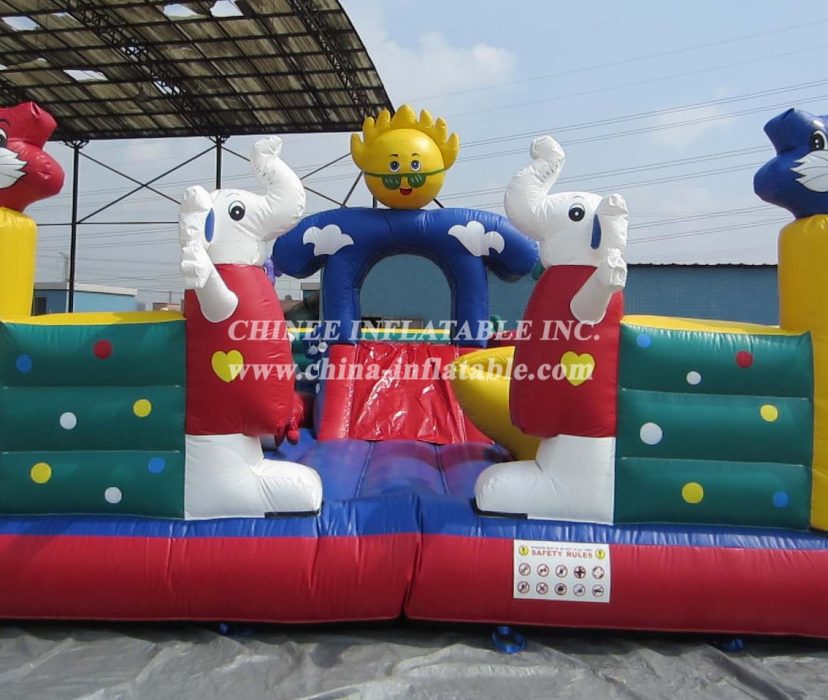
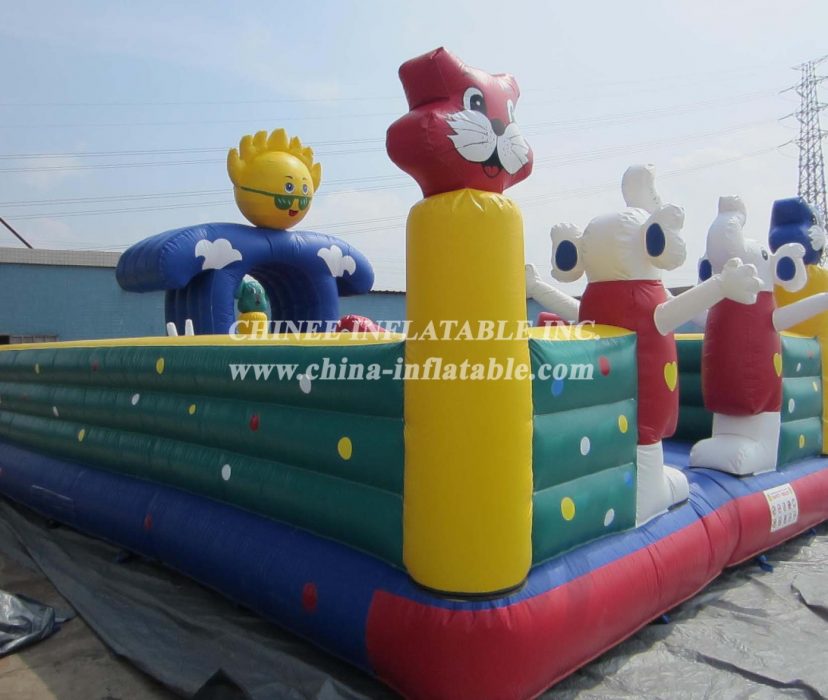
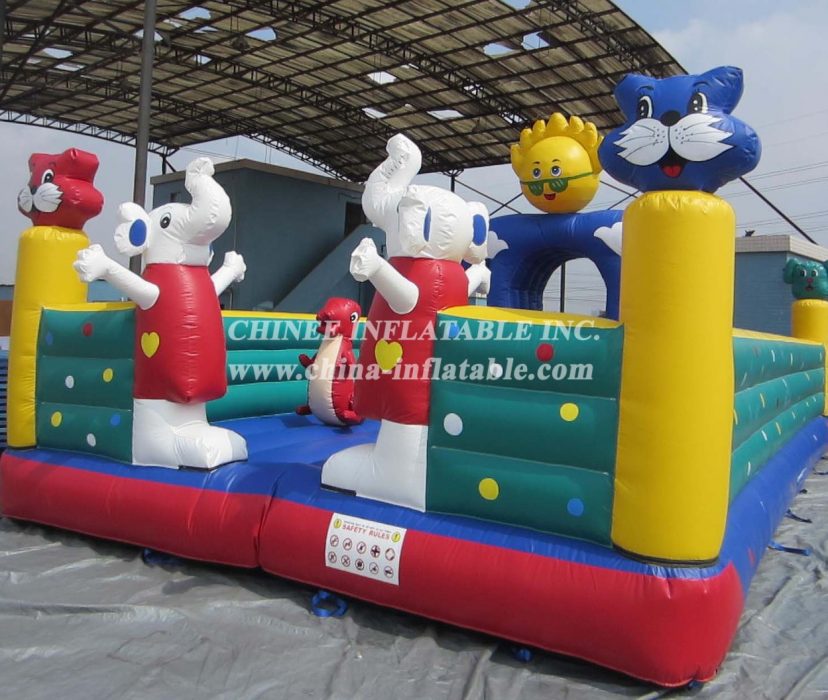
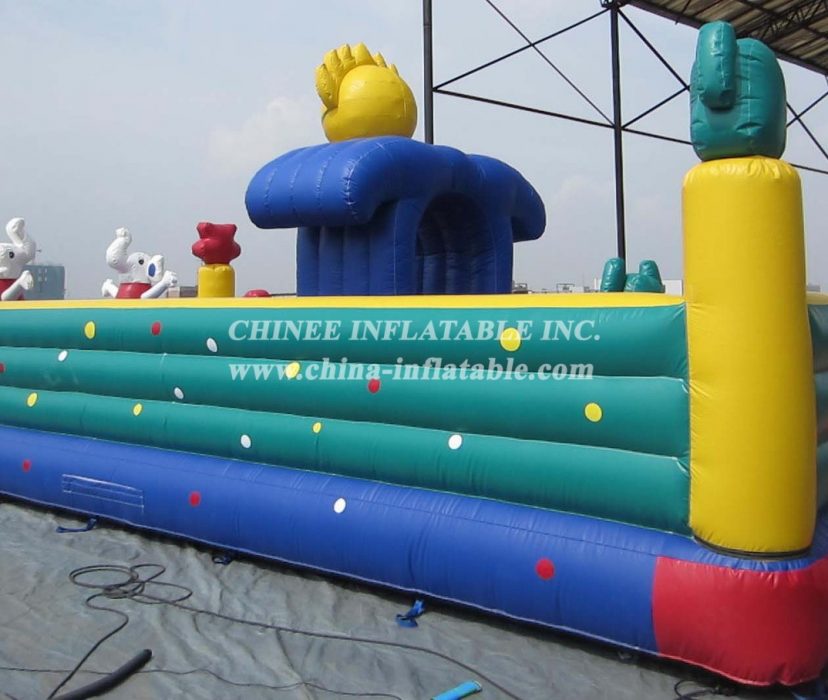
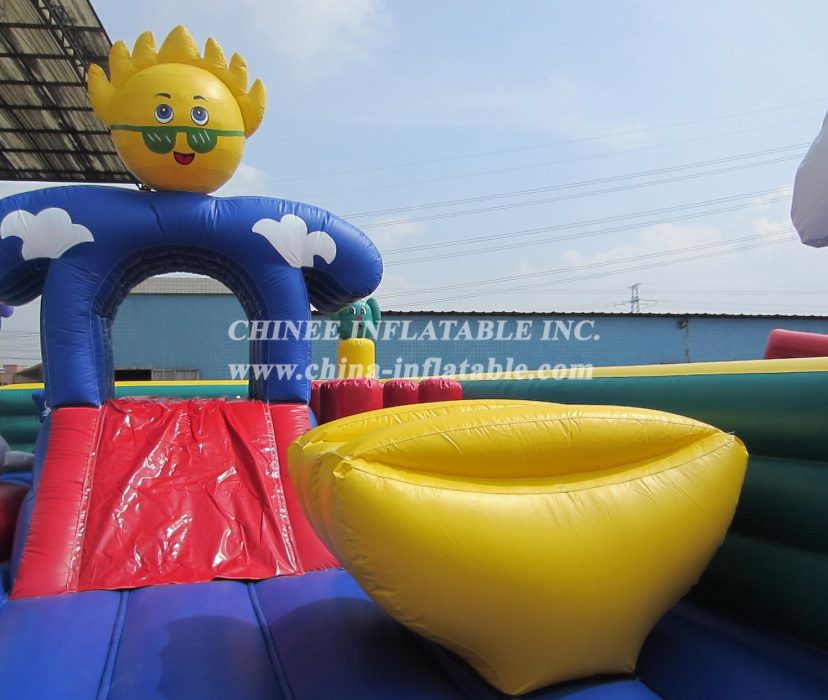
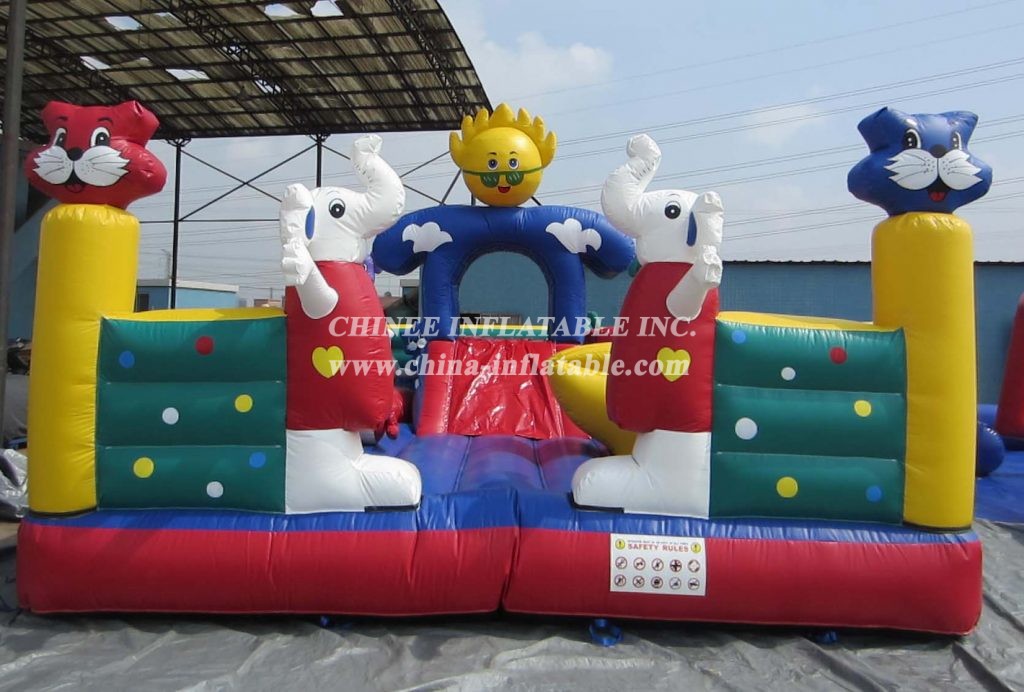
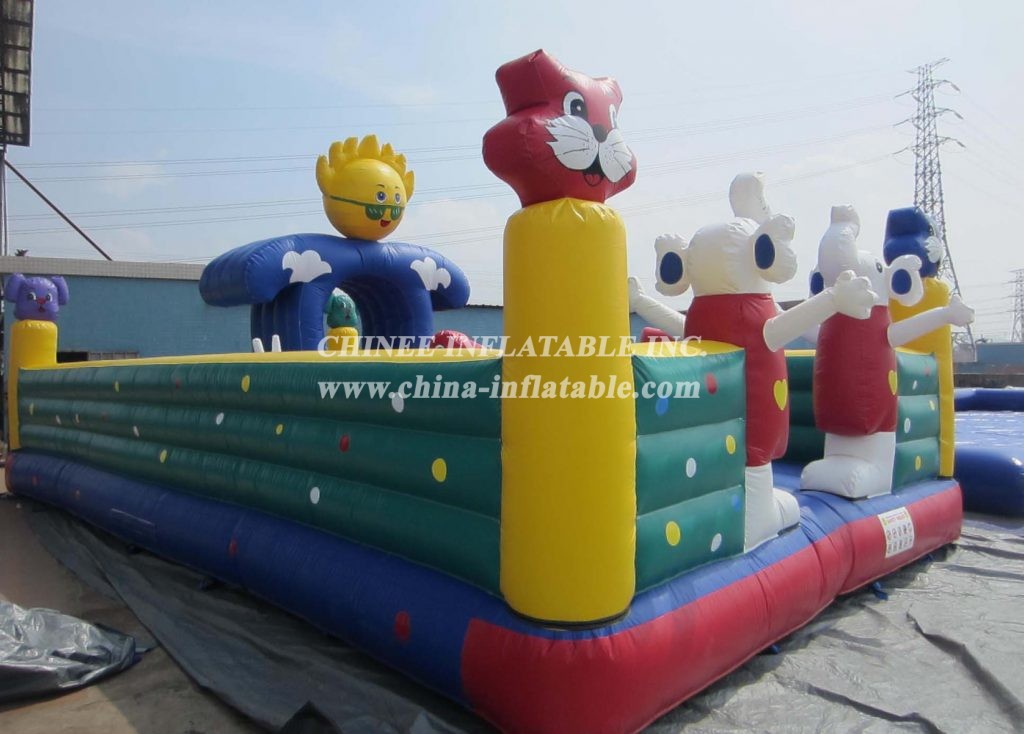
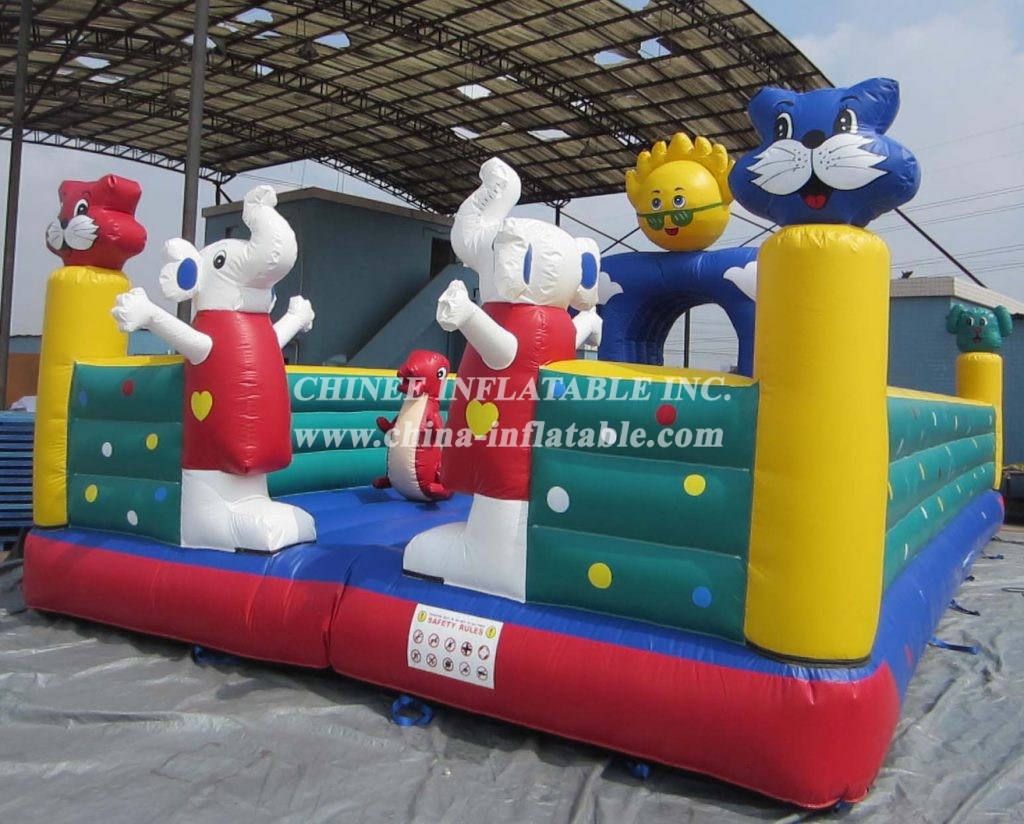
No.: T6-150
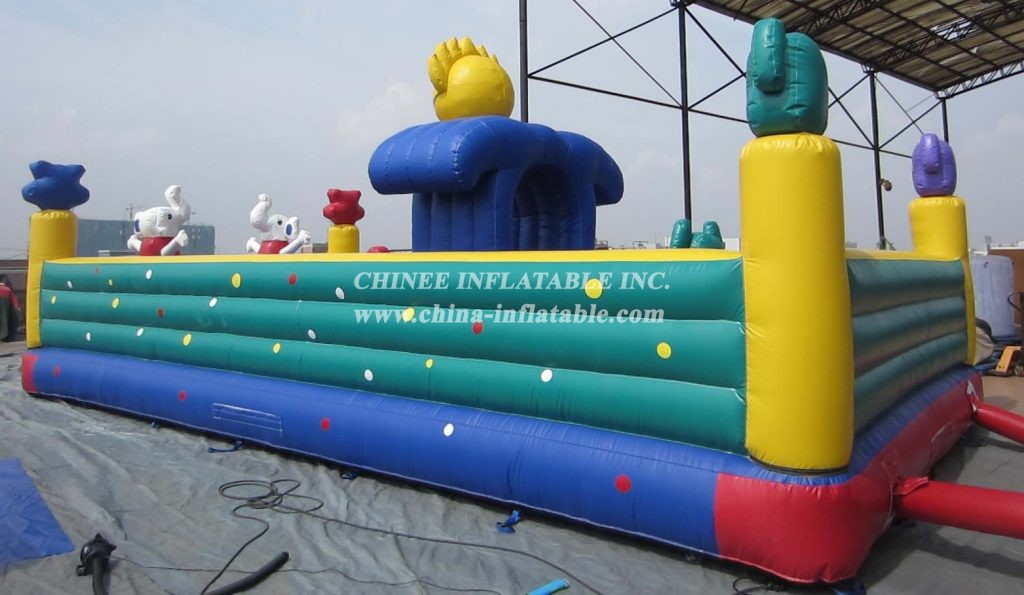
Size(m): 10m(L) × 6m(W) × 4m(H)
Size(ft): 32.8ft(L) × 19.7ft(W) × 13.1ft(H)
Customized: Yes
Weight: 290kg / 638lbs
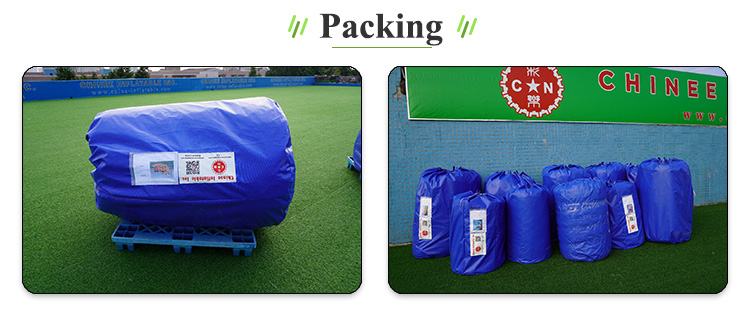
Packing(m): 1.8m(L) × 0.8m(W) × 0.8m(H)
Packing(ft): 5.9ft(L) × 2.6ft(W) × 2.6ft(H)


 |  | |
| ||
| Chinee Inflatables,a top inflatable manufacturer,sells good price and quality Bounce Houses T2-3203. | |


| Size (L x W x H): | We offer different size according to customer’s request. | |||
| Material: | 0.6mm+0.9mm durable PVC tarpaulin | |||
| Stitching: | Double stitching & quadruple in areas of high tear and at every corner. | |||
| Printing: | Digital print, silk print, or hand painting | |||
| Blower: | CE or UL for different area using, plug can also be customized. | |||
| Deflation: | Heavy duty quickly deflation zips. | |||
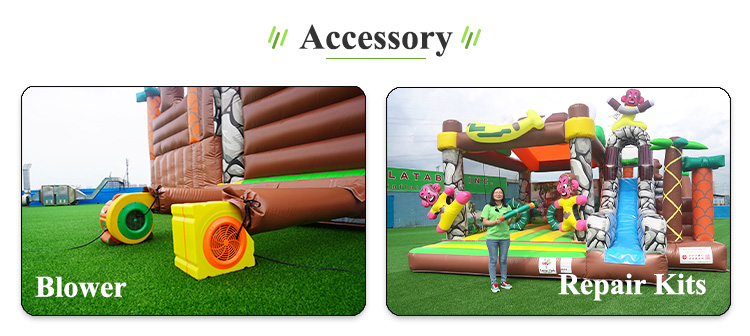
| Accessories: | Blower/ carrying bag /Repair kits and etc. | |||
| Packing: | Carton and high-strength PVC tarpaulin | |||
| Payment: | L/C, T/T, Western Union, PayPal, Cash, Money Gram, Bank Account | |||
| Trade Terms: | EXW, FOB, CRF, CIF price | |||
| Delivery Modes: | By Sea, By Air, By Express | |||
| Delivery Time: | 5-15 days after the order confirmed | |||
| Warranty: | 3-5 years | |||
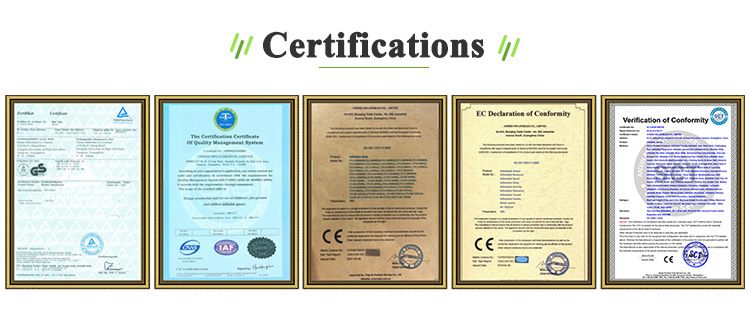
| Certificate: | CE, EN71, EN14960, SGS,ASTM,UL,ROHS | |||
| MOQ: | 1 piece | |||
Chinee Inflatable Inc. | |
Product NO | T6-150 |
Product Size | 10mL × 6mW × 4mH |
Packing Size | 1.8mL × 0.8mW × 0.8mH |
Weight | 290kg |
Customized | Yes |
Material | 0.6mm+0.9mm durable PVC tarpaulin |
Accessories | Blower/ carrying bag /Repair kits and etc. |
Warranty: | 3-5 years |
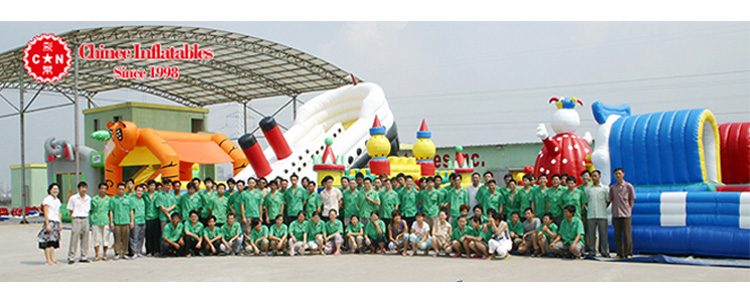
 More than 20 years concentration in inflatable industry.
Established in 1998,CHINEE inflatables is one of the biggest inflatable manufacturers in China. Centrally located in Guangzhou with factories in sngsha Economic & High-tech Zone of Fangcun. CHNEE group proudly hosts a skilled work force and offers its clients the benefits of being able to produce custom any number of custom specialty designs. Our product, includes the following inflated promotional and marketing iems: inflatable water park,inflatable bouncers,bouncy castles,giant slides and advertising tents, archways, inflatable water slides, amuscment park, inflatable combos and stimulate games, holiday inflatables & Christmas decorations. promotional accessories Animated cartoons and tube dancers, inflatable jumpers, advertising balloons, screens and billboards, inflatable pools, inflatable boats,obstacle courses, and so on, Inflatables for sale in Chinee.
1. High Quality Plato PVC Material
3 layers, Retardant, Non-toxic Environmental protection. Best material is very important for the inflatable games. Our inflatables are made by high durability fire retardant Tarpaulin, which has 3 layers as you can see from the left picture, double coated sides with a strong net inside.
2. Long Life
Our sewing tech is double stitching with fourfold stitching at the bottom stress point, we take care of all these details with extra reinforced bars to guarantee without any problems when customers use them, ensuring that the inflatables have a lifetime of over 3 years.
3. Reinforced Strips at Joint
Reinforced Strips to ensure the safety of players and durability of inflatables. We add reinforcing strips at the bottom joint and each corner to secure the safety of the kids on the bounce.
4. D-rings for fixation
Take a close look at the construction of the "D" rings in the products we sell. A tether system is only as strong as its weakest link. Tether points on the inflatable are extremely durable. The "D" ring tethering system has been laboratory tested by professional engineers for use on all giant slides and all other types of inflatables.
5. Durable deflation zippers
Durable deflation zippers will be added for all our inflatable bouncers, inflatable games, to help deflate quickly for each inflatable game according to EN14960 standard. We do reinforcement for all the zipper joints.
6. HD Printing
To reach the best specification of 1440DPI. We use advanced technical machine, the Polaris 512 high precision guide rail inkjet printer. After the printing, we will cover a UV protection oil layer to keep the image lasting bright and shining.
Related Products
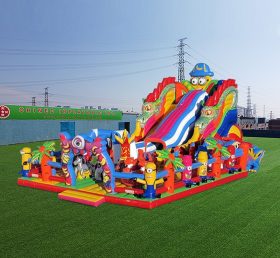
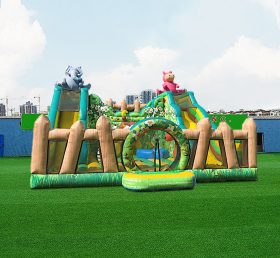
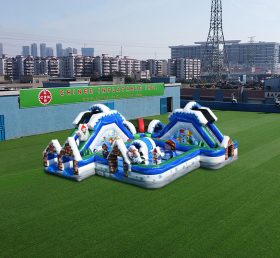
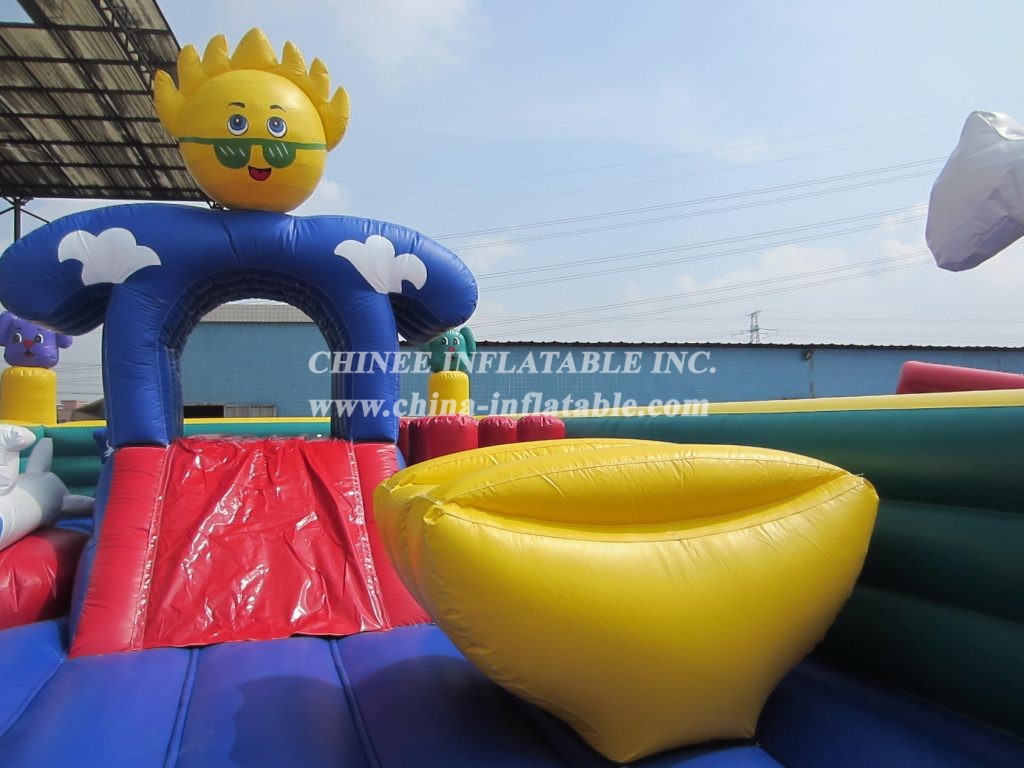
Chinee Inflatable is proud to introduce our latest product: the Blue Cat Giant Inflatable! Measuring 10 meters long, 6 meters wide, and 4 meters high, this inflatable is sure to provide endless hours of fun for kids and adults alike. But it’s not just for personal use – our inflatable is perfect for rental businesses as well.
Our Blue Cat Giant Inflatable is made from high-quality, durable materials that are designed to withstand years of use. It’s easy to set up and take down, and can be custom-sized to fit your specific needs.
In addition to being a great way to entertain guests at parties and events, our inflatable also offers a range of gameplay options. Kids can jump around in the inflatable jumper bounce house or race each other down the inflatable slide. The jump jump inflatables and inflatable air provide even more fun for kids of all ages.
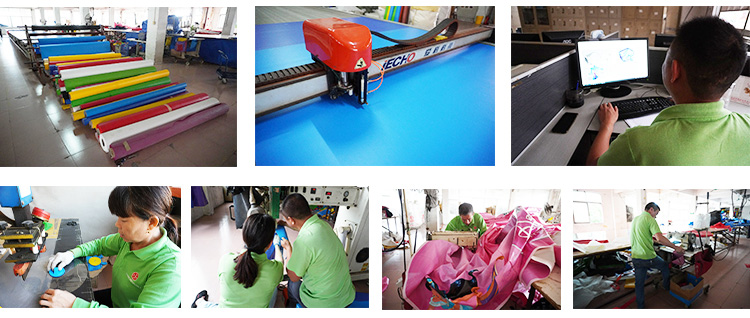
Our production process is carefully managed to ensure that each inflatable is made to the highest standards. We use only the best materials and employ skilled craftsmen to create each inflatable. Once complete, the inflatable is thoroughly tested to ensure that it meets our strict quality standards.
Related Keywords :Inflatable Funcity , Giant Slide , Challenging Run , Inflatable Playground , Inflatable Amusement , Inflatable Park , Inflatable Zone ,
Didn't find what you're looking for? Please Contact Us.or [email protected]


 English(US)
 English(UK)
 Español
 Português
 Deutsch
 Français
 Italiano
 Русский
 한국어
한국어 日本語
日本語 العربية
 Nederlands
 ไทย
ไทย Bahasa Indonesia
 Türkçe
 Română
 Ελληνικά
 Magyarország
 Suomalainen
 Svenskt
 norsk
norsk 中文
中文 हिंदी
हिंदी Tiếng Việt